RIGHT WAY TO BRUSH AND FLOSS YOUR TEETH
Maintaining good oral hygiene is one of the simplest and most effective ways to keep your teeth and gums healthy. Brushing and flossing correctly every day help remove plaque, prevent cavities, reduce the risk of gum disease, and keep your breath fresh. Even if you brush regularly, using the wrong technique can leave harmful bacteria behind.
Why Proper Brushing and Flossing Matter
Throughout the day, a sticky layer of bacteria called plaque forms on your teeth. If plaque isn’t removed daily, it can harden into tartar, which can only be removed by a dental professional. Poor oral hygiene may lead to:
- Tooth decay (cavities)
- Gum disease (gingivitis and periodontitis)
- Bad breath (halitosis)
- Tooth sensitivity
- Tooth discoloration
- Tooth loss in severe cases
Developing the right brushing and flossing habits can help you maintain a healthy smile for life.
How to Brush Your Teeth Correctly
1. Choose the Right Toothbrush
Use a soft-bristled toothbrush with a small head. Soft bristles clean effectively while protecting your gums and enamel.
2. Use Fluoride Toothpaste
Fluoride strengthens tooth enamel, repairs early tooth damage, and helps prevent cavities.
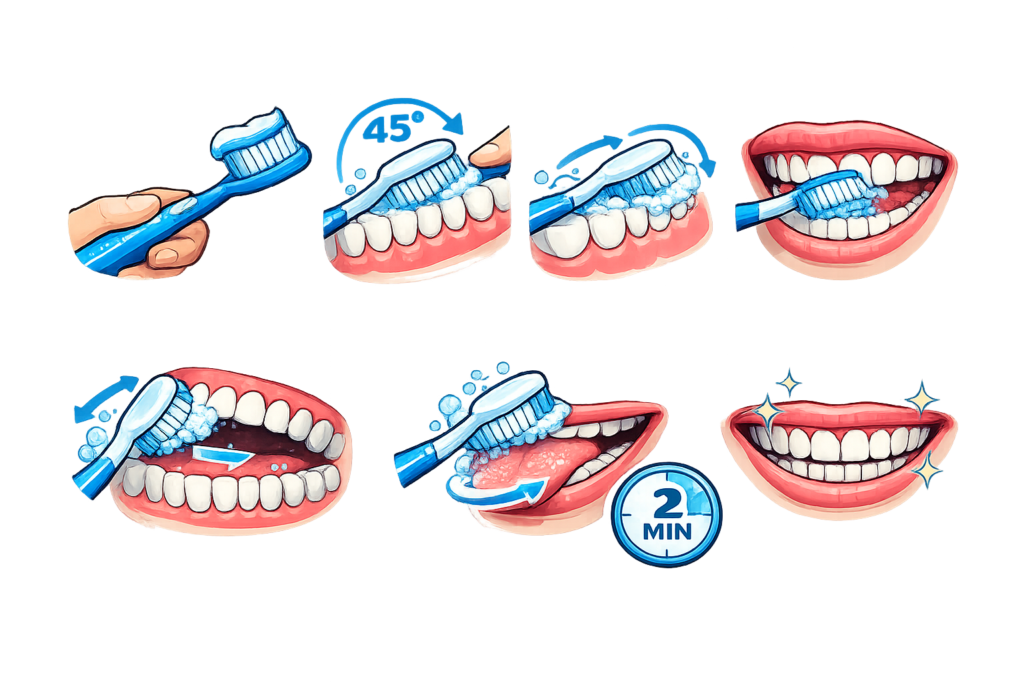
3. Hold the Brush at a 45° Angle
Position the toothbrush where your teeth meet your gums. This angle helps remove plaque along the gumline.
4. Brush with Gentle Circular Motions
Avoid scrubbing your teeth aggressively. Instead, use small, gentle circular motions to clean effectively without damaging your teeth or gums.
5. Clean Every Surface
Make sure you brush:
- Outer surfaces
- Inner surfaces
- Chewing surfaces
- Behind the front teeth
6. Brush Your Tongue
Bacteria can collect on your tongue and contribute to bad breath. Gently brushing your tongue helps keep your mouth fresh.
7. Brush for Two Minutes
Brush your teeth twice a day for at least two minutes each time—once in the morning and once before going to bed.
How to Floss Correctly
Flossing removes plaque and food particles from areas your toothbrush cannot reach.
Step 1
Take about 18 inches (45 cm) of dental floss and wrap most of it around your middle fingers.
Step 2
Hold about 1–2 inches (2.5–5 cm) of floss tightly between your thumbs and index fingers.
Step 3
Gently guide the floss between your teeth using a back-and-forth motion.
Step 4
Curve the floss into a “C” shape around each tooth and slide it gently beneath the gumline.
Step 5
Use a clean section of floss for each tooth to avoid spreading bacteria.
Floss at least once every day, preferably before bedtime.
Common Brushing Mistakes to Avoid
- Brushing too hard
- Using a hard-bristled toothbrush
- Brushing for less than two minutes
- Skipping flossing
- Forgetting to brush your tongue
- Using an old toothbrush (replace it every 3–4 months or sooner if the bristles are frayed)
- Rinsing vigorously immediately after brushing with fluoride toothpaste (spit out the excess toothpaste and avoid excessive rinsing to allow the fluoride to continue protecting your teeth)
Extra Tips for a Healthy Smile
- Limit sugary snacks and drinks.
- Drink plenty of water throughout the day.
- Eat a balanced diet rich in fruits, vegetables, and calcium-rich foods.
- Avoid smoking and tobacco products.
- Visit your dentist every six months for a routine check-up and professional cleaning.
- Wear a mouthguard if you play contact sports.
Final Thoughts
Healthy teeth begin with healthy habits. Brushing twice a day, flossing daily, and visiting your dentist regularly can help prevent dental problems before they start. By following these simple steps, you can enjoy a brighter smile, fresher breath, and better oral health for years to come.
Remember: Prevention is always easier—and less expensive—than treatment. Start taking care of your smile today!
.